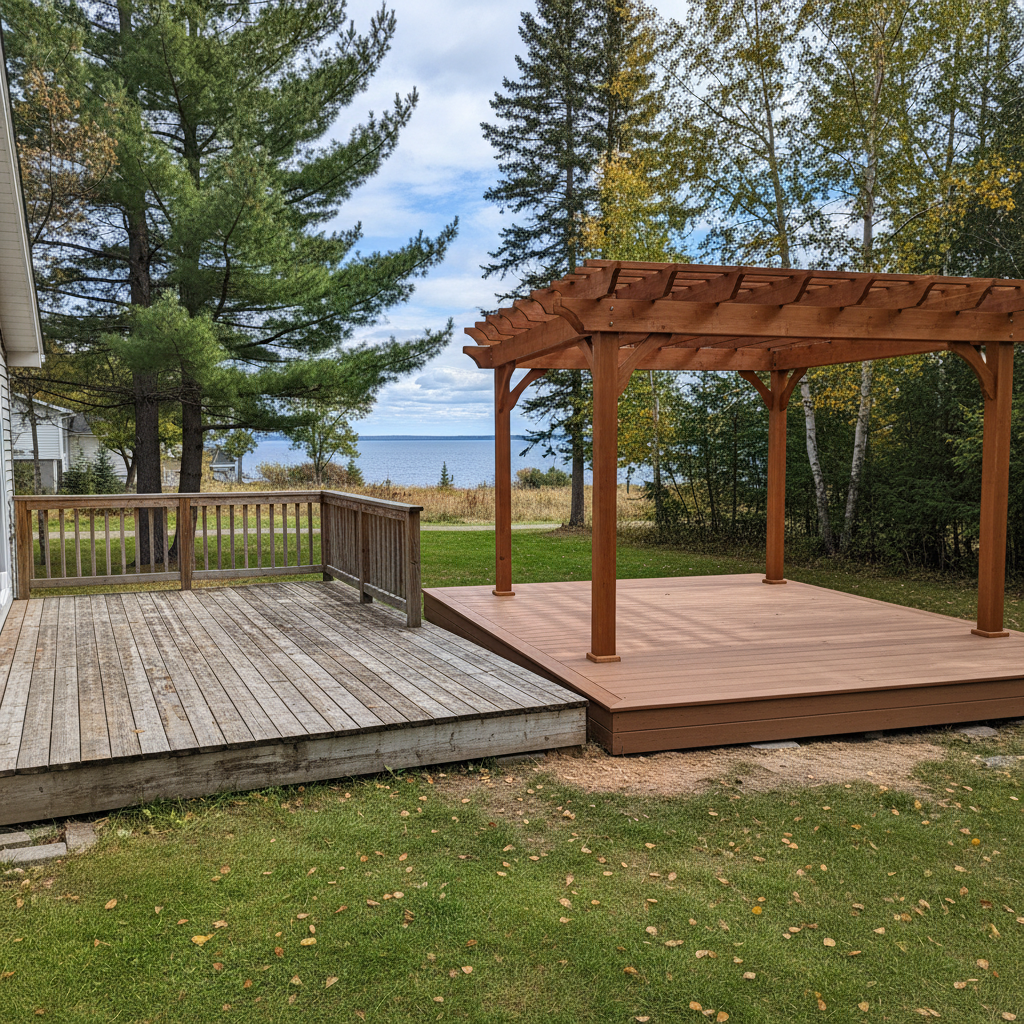
Homeowners often want some shade over their back patio, but they are stuck deciding between a classic wood pergola and a low-maintenance vinyl build. Duluth Custom Decks sees this debate all the time across Canal Park and up the hill in Hermantown. Both options have a place in our neck of the woods, but they behave completely differently once January hits and the lake winds start howling. Duluth Custom Decks will break down how they actually stack up against each other so homeowners do not end up regretting their backyard upgrade.
Upfront Costs and Budget Realities
Wood usually wins the initial price battle. When building with cedar or pressure-treated lumber, the materials are easier on the wallet right out of the gate. Vinyl kits or custom PVC-wrapped structures generally cost more upfront because of how the material is manufactured and reinforced internally. But you cannot just look at the receipt from day one. A wood pergola is going to demand cash and time down the road for stains and sealers. Vinyl costs more initially, but you are not buying gallons of sealer every few summers.
Durability Through Duluth Winters
Our weather up here is brutal on outdoor structures. Heavy lake-effect snow loads and rapid freeze-thaw cycles test everything we build. Cedar handles the cold well and has natural rot resistance, though it will check and split as it dries out. Pressure-treated wood is tough, but it twists if you do not anchor it right. Vinyl has its own quirks in sub-zero temperatures. Cheap vinyl can become brittle when it is twenty below, meaning a stray branch or heavy ice chunk can crack it. That is why any vinyl pergola worth putting up needs internal aluminum or galvanized steel reinforcement posts. Without that metal spine, our Duluth winds will fold a vinyl pergola.
Maintenance Effort and Upkeep
Homeowners must consider how much weekend work they actually want to do. Wood means maintenance. If you want that rich cedar look to stick around, you will be out there power washing, sanding, and staining every two to three years. Skip a season, and it turns silver-gray. Some people love that weathered look, but rot will eventually follow if you neglect it completely. Vinyl is much easier to care for. You spray it down with a hose and some soap in the spring, and you are done. There is no scraping, no staining, and no worrying about splinters when you walk underneath it.
Appearance and Curb Appeal
Nothing beats the natural warmth of real wood, especially against the backdrop of a classic Duluth home surrounded by pines. It looks organic and anchors into the landscape well. Vinyl has gotten better over the years, moving past that blinding-white plastic look into softer tans and wood-grain textures. Still, up close, you can tell it is synthetic. If you have a historic home down near the Lakewalk, vinyl might look out of place. If you have a newer build in the Miller Hill area, clean white vinyl often matches the modern siding and trim packages.
The Bottom Line Recommendation
Duluth Custom Decks tells homeowners to weigh their tolerance for maintenance against the architectural style of their house. If you love the traditional aesthetic and do not mind a weekend project every few years, go with thick-cut cedar. It ages gracefully and handles our climate punches well if it is built heavy. But if you want a backyard feature that will not rot in the damp shade near the lake, invest in a high-end, aluminum-reinforced vinyl pergola. Pick the one that matches how you actually live, and build it sturdy enough to stay put when the winter gales blow in off Lake Superior.