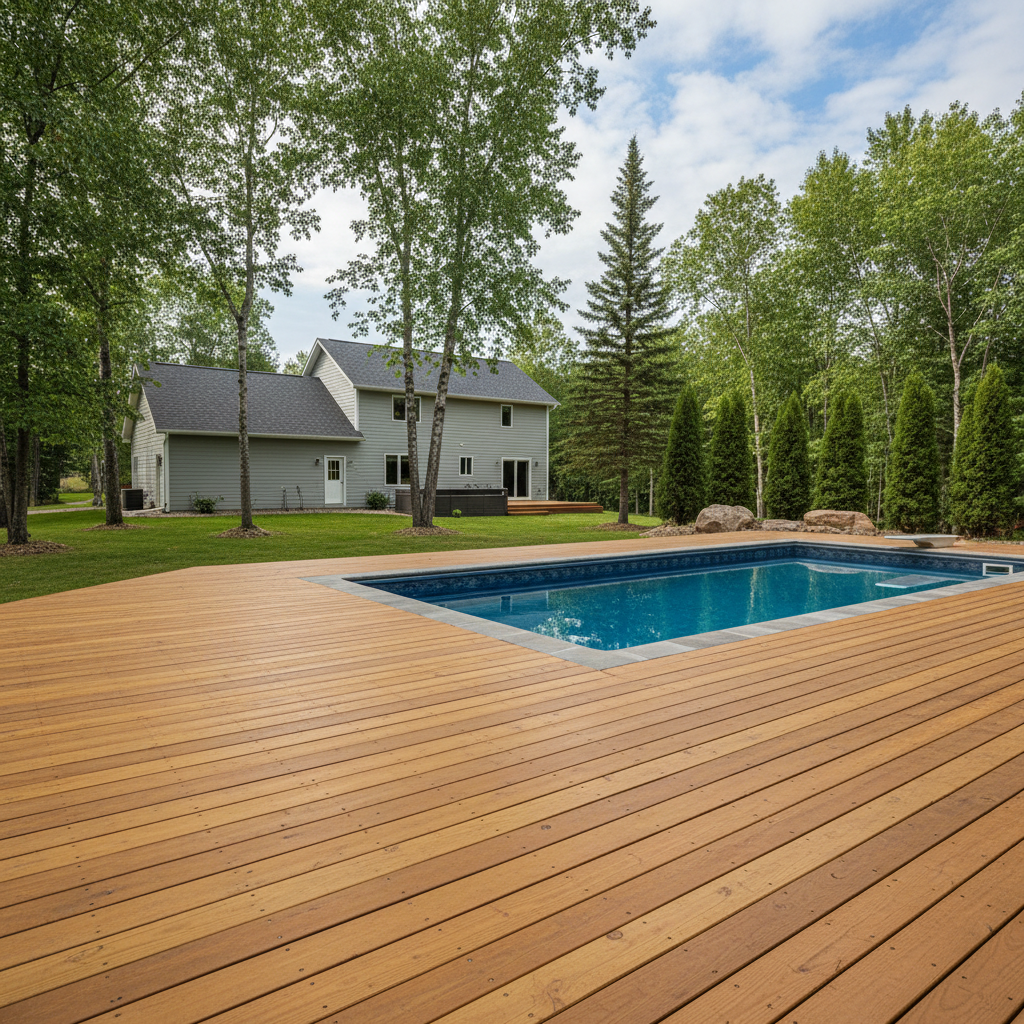
You’ve got a pool deck, right? That's awesome. But let's be real, up here in Duluth, that deck isn't just sitting pretty all year. It's battling freezing and thawing cycles, heavy snow, and then that intense summer sun. If you want that investment to last, you can't just ignore it. I've seen too many good decks go bad because folks didn't know what to look for or what to do.
Extending Your Pool Deck's Lifespan in Our Climate
The biggest enemy of any outdoor structure in Minnesota is water. Water gets in, freezes, expands, and then things crack or rot. It's a tale as old as time, especially when you're talking about a pool deck that's constantly getting splashed.
- Seal it up, regularly: If you've got a wood deck, this is non-negotiable. Stain and seal it every 2-3 years, maybe even yearly for high-traffic areas or if it's constantly wet. Use a good quality product that repels water and has UV protection. For concrete or paver decks, sealing is just as important. It prevents water absorption and protects against salt damage if you're using de-icers in winter (which, by the way, try to avoid on your deck if you can help it).
- Mind the drainage: Make sure water isn't pooling anywhere on or around your deck. If it is, that's a problem. Proper grading away from the deck and house is key. I've seen decks in places like Lakeside where the ground just holds water, and it's a constant battle. You might need to add some French drains or adjust landscaping.
- Winter prep is huge: Before winter hits, clear off all leaves and debris. Don't let snow pile up and sit directly against the deck for months. If you're shoveling, use a plastic shovel and be careful not to gouge the surface. Avoid using rock salt or harsh de-icers on wood or concrete; they can be really damaging. Sand is a better bet for traction.
Regular Maintenance You Can Do Yourself
This isn't rocket science, but it takes consistency. Think of it like changing the oil in your car.
- Keep it clean: Sweep or blow off debris weekly. Leaves, dirt, pine needles – they all hold moisture and can lead to mildew, staining, or even rot. A good wash down with a mild detergent and a soft brush once a month during pool season is smart.
- Check for mildew and algae: These love damp, shaded spots. Not only do they look bad, but they can make your deck slippery and accelerate deterioration. A simple solution of water and bleach (1 part bleach to 4 parts water) or a commercial deck cleaner can usually take care of it. Rinse thoroughly.
- Inspect fasteners: Screws and nails can work themselves loose over time, especially with all the expansion and contraction we get. Walk around and just give things a quick check. Hammer down any popped nails or tighten screws.
Warning Signs of Trouble
Your deck will tell you when something's wrong, you just need to listen. Or, you know, look.
- Soft spots or spongy areas: If you step somewhere and it feels like it's giving way, that's a red flag for rot. Don't ignore it.
- Cracks, splinters, or excessive warping: A few small cracks in concrete are normal, but large, spreading cracks mean structural issues. For wood, excessive splintering or warping that wasn't there before indicates it's losing its protective finish or absorbing too much water.
- Loose railings or wobbly steps: This is a safety hazard, plain and simple. If your railing isn't solid, someone could get hurt.
- Mold or mildew that won't go away: If you're cleaning regularly and it's still popping up fast, you might have a persistent moisture problem.
- Fading or discoloration: This means your sealant or stain is failing, leaving the material exposed to UV rays and moisture.
When to Call a Professional (Like Duluth Custom Decks)
Look, sometimes you can DIY, and sometimes you need an expert. Don't be afraid to call someone in. It's usually cheaper to fix a small problem than replace a whole deck.
- Structural concerns: If you see major cracks in concrete, significant rot in support beams, or serious sagging, that's beyond a weekend project. You need someone who knows what they're doing to assess the integrity.
- Persistent water issues: If you've tried to improve drainage and water is still pooling or causing problems, a professional can help identify the root cause and implement a lasting solution.
- Major repairs or replacements: If you've got multiple rotten boards, a railing that needs to be completely rebuilt, or if you're thinking about a full resurfacing, it's time to bring in the pros. We've got the tools, the experience, and the right materials to get it done safely and correctly.
- Annual inspections: If you're not comfortable doing a thorough inspection yourself, or just want peace of mind, consider having a professional like us do an annual check-up. We can spot things you might miss and give you a heads-up before they become big, expensive problems.
Taking care of your pool deck means you'll get more years of enjoyment out of it, and you'll keep your family and friends safe. It’s an investment, so protect it.