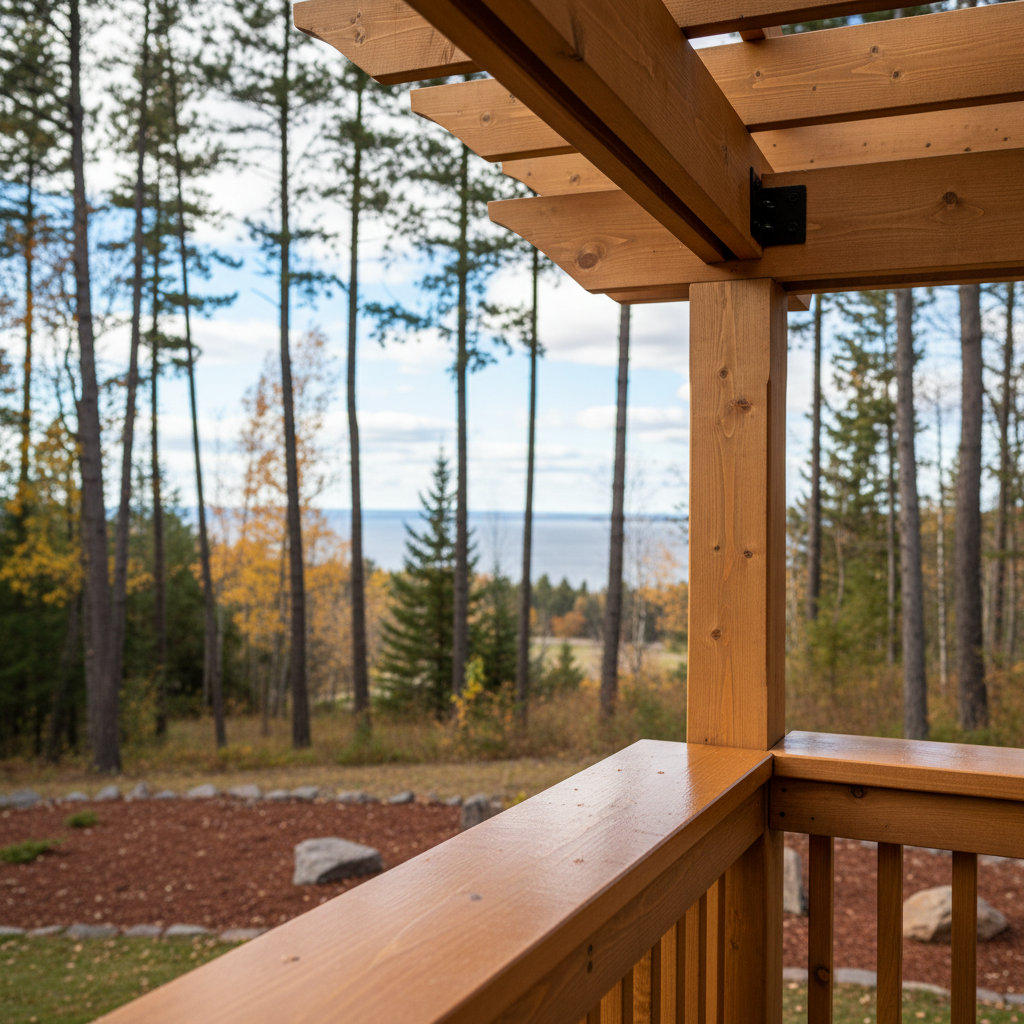
Alright, let's talk pergolas. I get a lot of calls from folks around Duluth, from Lakeside to Lincoln Park, who are curious about adding one of these structures to their yard or deck. They've seen pictures, they like the idea, but they've got some real practical questions. That's good — you should ask. You're investing in your home, after all, and you want to know what you're getting into. So, I've rounded up the most common questions I hear and I'm giving you my honest answers, no fluff.
What's the real difference between a pergola and a gazebo?
This is probably the most common question I get. People sometimes use the terms interchangeably, but they're not the same thing. A gazebo is a fully roofed, often octagonal or round, freestanding structure. Think of it like a small, open-sided building. It gives you full shade and protection from rain. A pergola, on the other hand, typically has an open, slatted roof. It's designed to provide partial shade, define an outdoor space, and often serves as a support for climbing plants. It's more about creating an aesthetic and a feeling of enclosure without completely blocking out the sky. You'll get dappled sunlight, not full cover. We build both, but they serve different purposes.
Do I need a permit for a pergola in Duluth?
Yep, you almost certainly will. Any structure attached to your house, or a freestanding structure over a certain size (usually 120 square feet, but always check current city codes), typically needs a building permit in Duluth. Even if it's smaller, if it's got footings that go below the frost line – which they should, especially up here with our deep freezes – you're likely going to need one. It's not just about the structure itself, but also about setbacks from property lines and easements. Don't skip this step. Getting caught without a permit can lead to fines, or worse, having to tear down your new pergola. We handle all the permitting paperwork for our clients at Duluth Custom Decks, because it's a headache you don't need.
What materials are best for a Duluth pergola, considering our weather?
Our weather here in Duluth is no joke, right? You've got to pick materials that can stand up to heavy snow loads, strong winds off the lake, and those big temperature swings. For wood, cedar and redwood are excellent choices because they're naturally resistant to rot and insects. Pressure-treated lumber is also a solid, more budget-friendly option, but you'll want to stain or seal it regularly. Composite materials are gaining popularity for pergolas, just like they have for decks. They're low maintenance, don't rot, splinter, or warp, and come in a variety of colors. The upfront cost is higher, but the long-term savings on maintenance can make it worthwhile. Aluminum pergolas are another great choice for durability and minimal upkeep, especially for a more modern look. I'd lean away from untreated pine or anything that isn't specifically rated for outdoor use in harsh conditions.
How much shade will a pergola actually provide?
This depends entirely on the design. A traditional pergola with widely spaced rafters will give you partial, dappled shade. It's great for softening direct sun and creating a comfortable outdoor room, but it won't block out the sun completely. If you want more shade, we can design it with closer-set rafters, or add a louvered roof system that you can adjust. Another popular option is to incorporate a retractable shade canopy or even grow climbing vines like wisteria or grapes over the top. The plants will take a few seasons to get established, but they add a beautiful, natural canopy. Think about the direction of the sun on your property throughout the day and year – that'll help us figure out the best design for your shade needs.
Can a pergola be built on an existing deck?
Absolutely, in most cases. Many pergolas are designed to be built right on top of an existing deck. However, there are a few critical things to consider. First, is your existing deck structurally sound enough to support the added weight of the pergola? This is especially important for snow loads in winter. We'll need to inspect the deck's framing and footings. Sometimes, we might need to reinforce certain areas or add new footings. Second, how will the pergola posts be anchored? They need to be securely fastened to the deck's joists or beams, not just the decking boards. We often run the posts down to the footings or attach them directly to the house if it's a ledger-attached pergola. It's all about making sure it's safe and stable, especially with those winds we get off Lake Superior.
What's the typical timeline for a pergola project?
From initial consultation to final construction, a pergola project usually takes a few weeks to a couple of months. The design phase can take a week or two, depending on how quickly we finalize plans and materials. Then there's the permitting process, which can be the longest part – sometimes 2-4 weeks, depending on the city's workload. Once we have the permits and materials on site, the actual construction usually goes pretty fast. For a standard-sized pergola, my crew can often have it built in 3-7 days, depending on complexity and weather. Of course, bigger, more intricate designs or those requiring extensive site prep will take longer. We always give you a clear timeline upfront so you know what to expect.
How much maintenance does a pergola require?
The amount of maintenance really depends on the material you choose. A wood pergola, especially cedar or pressure-treated, will need regular cleaning and re-sealing or staining every 2-3 years to protect it from our harsh Duluth climate. You'll want to check for any loose fasteners or signs of rot annually. Composite or aluminum pergolas are much lower maintenance. A simple wash-down with soap and water once or twice a year is usually all they need to keep them looking good. If you've got climbing plants, you'll need to prune those regularly to keep them from overgrowing and potentially damaging the structure. It's all about protecting your investment so it lasts for years to come.