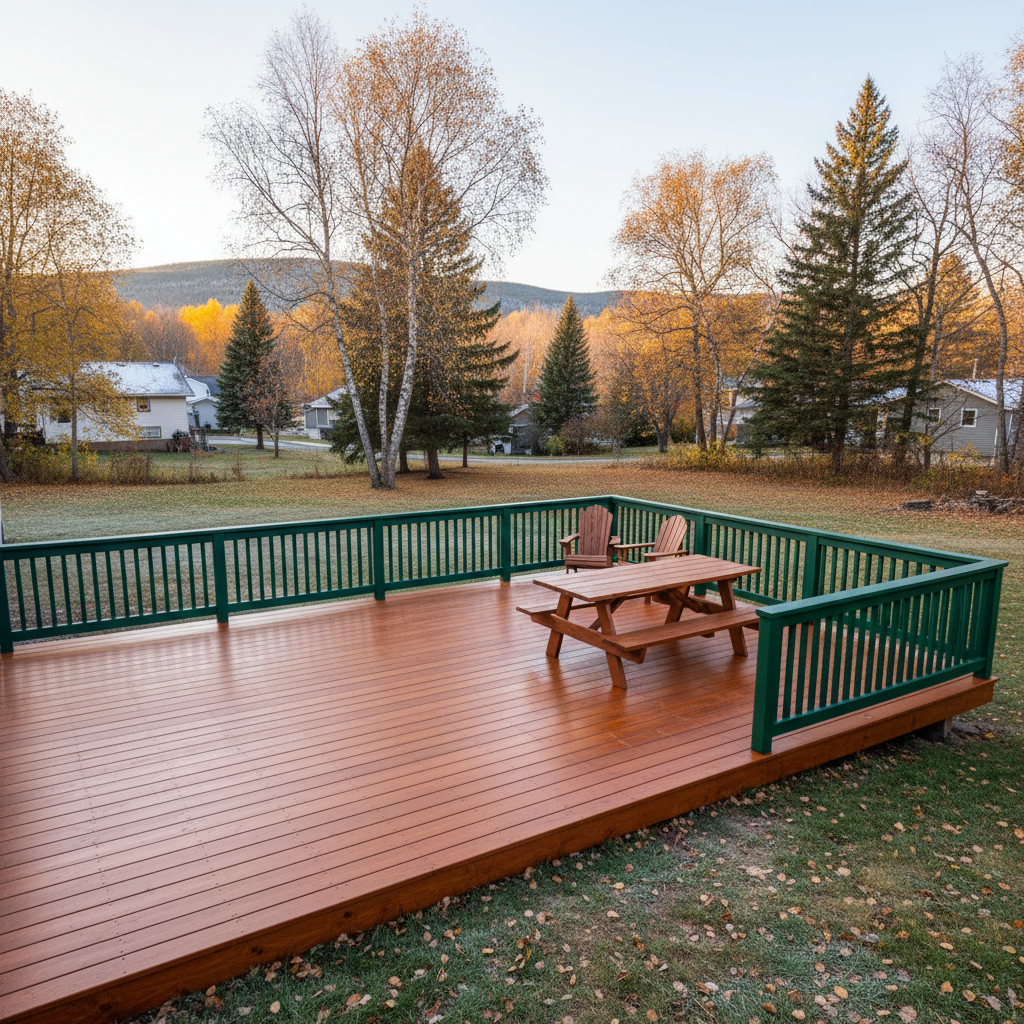
You have a deck, and you know it needs some attention. In Duluth, just grabbing a can of stain and doing the work whenever you feel like it is a recipe for problems. Our Duluth climate is serious, and if you want that deck to last, you must follow its rules when it comes to painting as well as staining. Duluth Custom Decks understands these local conditions.
When to Schedule Your Deck Staining in Duluth
Our prime Deck Staining in Duluth window is not very big. The key is finding that good time where temperatures are correct, and you have a good stretch of dry weather. Generally, late spring and early fall are your best times for Deck Staining in Duluth.
- Late Spring (Late May through June): Once the snow has finally melted, and the wood has had a chance to dry out from all that moisture, late spring can offer good conditions for Deck Staining in Duluth. You want stable temperatures, ideally between 50°F and 80°F. This period allows for proper stain penetration as well as curing before the full heat of summer starts.
- Early Fall (September to early October): This is often a favorite time for Deck Staining in Duluth. The hot summer heat is gone, and the humidity usually drops. Temperatures are typically mild, making it good for stain application. For us in Duluth, September usually sees average highs in the upper 60s, with lows in the 50s. This timing lets the stain cure completely before the very cold temperatures as well as the freeze-thaw cycles start causing problems.
You must avoid Deck Staining in Duluth too early in the spring, especially if you have a new deck. Pressure-treated lumber needs time to dry out, sometimes three to six months, before it will properly take stain. Do a water-drop test on your deck: if water beads up, it is too wet; if it soaks in, you are ready to go.
Weather Conditions That Make or Break Your Deck Staining in Duluth Work
It is not just about the month for your Deck Staining in Duluth; it is about the daily forecast. Here is what you need to watch for:
- Temperature: This is important for Deck Staining in Duluth. You want air and wood surface temperatures between 50°F and 90°F. If it is too cold, below 50°F, the stain will not cure correctly and will not go into the wood. This leads to poor adhesion as well as a short lifespan for your deck finish. If it is too hot, above 90°F, the stain dries too fast. This leaves you with lap marks, uneven penetration, and a blotchy finish on your Duluth deck.
- Humidity: High humidity means longer drying times for your Deck Staining in Duluth project. While it might not ruin the project, it can definitely make it take longer and affect how well the stain cures. Duluth's average humidity is around 71% year-round, with September often being the highest at 76%. Aim for days with lower humidity if you can.
- Rain: This one is clear. You need a dry period for your Deck Staining in Duluth. Most stains need 24 to 48 hours without rain after application to properly cure. Do not even think about starting if rain is in the forecast for Duluth. Our wettest months are typically June, July, and August, so plan your Deck Staining in Duluth around those rainy days.
- Direct Sunlight & Wind: Staining your deck in direct, hot sunlight makes the stain dry too quickly. This stops proper penetration of the stain. Try to work in the shade or on an overcast day for your Deck Staining in Duluth. Windy conditions can also be a problem, blowing leaves, dirt, or other debris onto your wet stain. In addition, a strong breeze can speed up drying too much.
Protecting Your Deck Investment Year-Round in Duluth
Duluth's weather is harsh. We get heavy snow, freezing winters, and then that summer sun. Your deck needs protection all year, not just when you stain it. Duluth Custom Decks helps homeowners with this protection.
- Regular Cleaning: Keep your deck clean. Dirt, grime, and mildew can break down your stain as well as damage the wood. A good cleaning once or twice a year, especially after the spring thaw, can make a big difference for your Duluth deck.
- Snow Removal: Do not let heavy snow sit on your deck all winter. While a light, fluffy layer can act as insulation, heavy, wet snow or ice dams can cause significant moisture damage as well as stress on the deck structure. Clear it off carefully to avoid scraping the deck surface.
- Check for Damage: After our harsh Duluth winters, always inspect your deck for loose boards, popped nails, or any signs of rot. Catching these problems early can prevent bigger, more expensive problems later on.
- Reapply as Needed: Even the best stain will not last forever in our Duluth climate. Transparent stains might need reapplication every year or two, while solid stains can last longer. Keep an eye out for fading, peeling, or water no longer beading on the surface. That is your sign it is time for another coat of Deck Staining in Duluth. Duluth Custom Decks always recommends staying on top of this maintenance to get the most life out of your outdoor living space.
Taking the time to understand our local Duluth climate and how it impacts your deck's finish will save you a lot of trouble as well as money in the long run. Do not rush your Deck Staining in Duluth, pick the correct day, and your deck will be looking good and standing strong for years to come.